

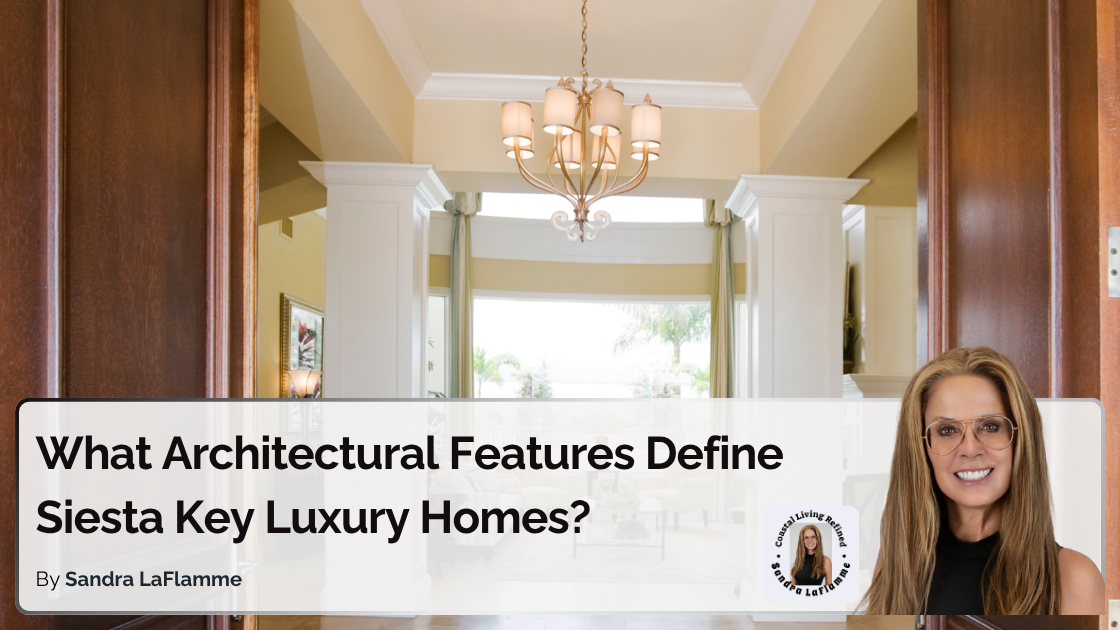
Siesta Key luxury home architecture is not defined by size alone. It is defined by how a home interacts with its surroundings, how it captures light, and how it supports the way people actually live on the water.
Most buyers begin by looking at finishes.
But finishes are not what make a home work.
Architecture is.
Once you walk through enough properties, the pattern becomes clear. Some homes feel effortless. Others feel forced—even when they cost the same.
If you’ve been exploring homes through Coastal Luxury Sarasota, you’ve likely already seen how design separates properties quickly.
What is Siesta Key luxury home architecture?
Siesta Key luxury home architecture refers to the structural design and layout principles that define high-end coastal properties.
It focuses on:
- Connection to water views
- Open, functional layouts
- Natural light integration
- Durability in coastal conditions
Unlike traditional homes, architecture on Siesta Key is shaped by both environment and lifestyle.
Why does architecture matter more than finishes?
Finishes can be updated. Architecture cannot.
A poorly designed layout will always feel restrictive, no matter how expensive the materials are.
Buyers who understand this prioritize:
- Flow between spaces
- Placement of key rooms
- Orientation toward water views
This shift in thinking is often what separates first-time luxury buyers from experienced ones.
How does open floor plan design define Siesta Key luxury home architecture?
Open layouts are one of the most important architectural features in Siesta Key homes.
But not all open layouts are equal.
The strongest designs:
- Connect kitchen, living, and dining spaces seamlessly
- Maintain clear sightlines to the water
- Allow natural movement without obstacles
When done correctly, the space feels larger without increasing square footage.

How do large glass walls shape luxury coastal homes?
Glass is one of the defining elements of Siesta Key luxury home architecture.
Buyers expect:
- Floor-to-ceiling windows
- Sliding glass walls
- Unobstructed views of the Gulf or bay
These features blur the line between inside and outside.
Homes without this connection often feel closed off, even if they are well finished.
Why is elevation a critical architectural feature?
Elevation is not just about views—it is about protection.
Coastal homes must be designed to handle:
- Flood zones
- Storm surge
- Wind exposure
Elevated construction protects both the structure and the investment.
Guidelines from the Federal Emergency Management Agency outline how elevation impacts flood risk and insurance requirements.
How does indoor-outdoor integration define Siesta Key luxury home architecture?
Luxury homes on Siesta Key are designed to extend beyond interior walls.
Buyers look for:
- Covered lanais connected to living spaces
- Outdoor kitchens and seating areas
- Pools positioned toward water views
This integration creates a continuous living experience rather than separate zones.
What role does orientation play in architectural design?
Orientation affects how a home feels throughout the day.
Buyers evaluate:
- Sunset exposure over the Gulf
- Morning light in living areas
- Protection from direct afternoon heat
Homes designed with proper orientation feel more comfortable without relying heavily on mechanical systems.
Data from the U.S. Census Bureau shows continued population growth in coastal regions, increasing demand for well-positioned properties.
How does material selection support coastal architecture?
Materials used in Siesta Key luxury homes must handle the coastal environment.
Buyers should look for:
- Impact-resistant glass
- Corrosion-resistant metals
- Moisture-resistant finishes
These materials extend the life of the home and reduce maintenance.
Why does architectural consistency matter?
Consistency is often overlooked.
Buyers respond to homes where design elements align throughout the property.
This includes:
- Matching materials across spaces
- Balanced proportions
- Cohesive design themes
Inconsistent design creates visual tension, even if buyers cannot explain why.
How do buyers research Siesta Key luxury home architecture?
Most buyers begin online.
They explore listings through Sandra’s eXp Realty platform, compare properties on Zillow, and review agent insights through Realtor.com.
However, architectural quality cannot be fully understood through photos.
It requires interpretation and experience.
Why working with an expert matters in architectural evaluation
Sandra LaFlamme brings over 28 years of experience evaluating properties beyond surface-level features.
Her background in technology and analytics allows her to identify:
- Design strengths that hold long-term value
- Layout issues that limit usability
- Opportunities others overlook
She is recognized as the #1 Relocation Agent in Southwest Florida and ranks in the top 10% of agents worldwide.
This level of insight helps clients make decisions with confidence.
How Siesta Key luxury home architecture affects long-term value
Architecture directly impacts resale performance.
Homes that:
- Capture views effectively
- Offer functional layouts
- Use durable materials
tend to attract stronger buyer demand over time.
Market trends tracked in the Sarasota Market Report show that well-designed properties outperform others consistently.
What separates exceptional architecture from average design?
Exceptional architecture feels natural.
Average design feels forced.
The difference shows up in:
- Ease of movement
- Connection to the environment
- Balance between form and function
Buyers who recognize this difference tend to select properties that perform better long-term.
How Siesta Key Luxury Home Architecture Impacts Daily Living
At first, architecture feels like a design conversation. Layout, windows, materials. But once you spend time in different homes, it becomes something else entirely.
It becomes about how the home supports your day.
The strongest examples of Siesta Key luxury home architecture are the ones you stop noticing after a while. Everything works the way it should. Movement feels natural. Views are always present without effort.
You are not adjusting to the home. The home is already aligned with you.
That is the difference buyers feel but often struggle to describe.
Why architectural flow matters more than square footage
Many buyers initially focus on size. Larger homes seem like better value.
But after walking through multiple properties, the pattern becomes clear.
A well-designed 3,500-square-foot home often feels more functional than a poorly designed 5,000-square-foot property.
The difference is flow.
Strong Siesta Key luxury home architecture creates a natural progression:
- Entry leads directly into open living areas
- Living areas connect seamlessly to outdoor spaces
- Private areas remain separated without feeling isolated
When this flow is missing, the home feels disjointed—even if it is beautifully finished.
How Siesta Key Luxury Home Architecture Enhances Views
Views are one of the most valuable aspects of coastal real estate, but they are only as strong as the architecture that frames them.
Buyers often assume that a waterfront lot guarantees great views.
It does not.
Architecture determines how those views are experienced.
Key elements include:
- Window placement aligned with sightlines
- Minimized structural obstructions
- Elevated living areas positioned toward the water
- Outdoor spaces oriented to maximize exposure
Homes that capture views correctly feel expansive. Homes that do not can feel restricted, even on premium lots.
Why Simplicity Defines the Best Architectural Designs
One of the most consistent patterns in high-performing properties is simplicity.
The best Siesta Key luxury home architecture does not try to do too much.
It focuses on:
- Clean lines
- Open, uncluttered spaces
- Materials that complement the environment
- Design that feels timeless rather than trendy
Complex designs often age quickly. Simple, well-executed architecture tends to hold value longer.
How Sandra LaFlamme Evaluates Architectural Strength
Most buyers evaluate homes based on what they see. Sandra LaFlamme evaluates homes based on how they perform.
Her process goes beyond finishes and staging. She looks at how the architecture supports both lifestyle and long-term value.
This includes:
- Analyzing how the layout functions in real use
- Identifying design elements that will age well
- Recognizing structural limitations that affect resale
- Comparing properties within the broader market context
With more than 28 years of experience, she has developed the ability to identify strengths and weaknesses quickly—often before they become obvious to buyers.
This is where clarity begins to replace uncertainty.
How Buyers Move From Observation to Decision
At the beginning of the process, buyers often feel overwhelmed.
There are too many options. Too many variables.
But over time, patterns begin to emerge.
Buyers start to recognize which homes feel right and which ones do not—regardless of price.
This shift happens when they begin to understand Siesta Key luxury home architecture at a deeper level.
They stop reacting to surface details and start evaluating structure, flow, and positioning.
That is when decisions become easier.
What to Focus on When Evaluating Architectural Design
Luxury real estate becomes more manageable when you narrow your focus to what actually matters.
Instead of trying to evaluate every detail, concentrate on:
- How the home captures and frames views
- Whether the layout supports daily living
- If indoor and outdoor spaces are fully integrated
- Whether the design feels cohesive throughout
These are the elements that consistently define strong properties.
Once you recognize them, the market becomes clearer—and the right opportunities stand out quickly.
Your Next Strategic Move
Luxury real estate decisions become easier when you understand what truly matters.
Call 941-867-8325
📅 Schedule your consultation now
FAQ: Siesta Key Luxury Home Architecture
What defines luxury home architecture on Siesta Key?
It includes open layouts, waterfront orientation, durable materials, and seamless indoor-outdoor integration.
Why is elevation important?
Elevation protects the home from flooding and improves long-term value.
Do architectural features affect resale value?
Yes. Homes with strong design and functionality attract more buyers and perform better over time.
Can architecture be changed after purchase?
Some elements can be modified, but core layout and positioning cannot be easily changed.